
The Beastly Blog
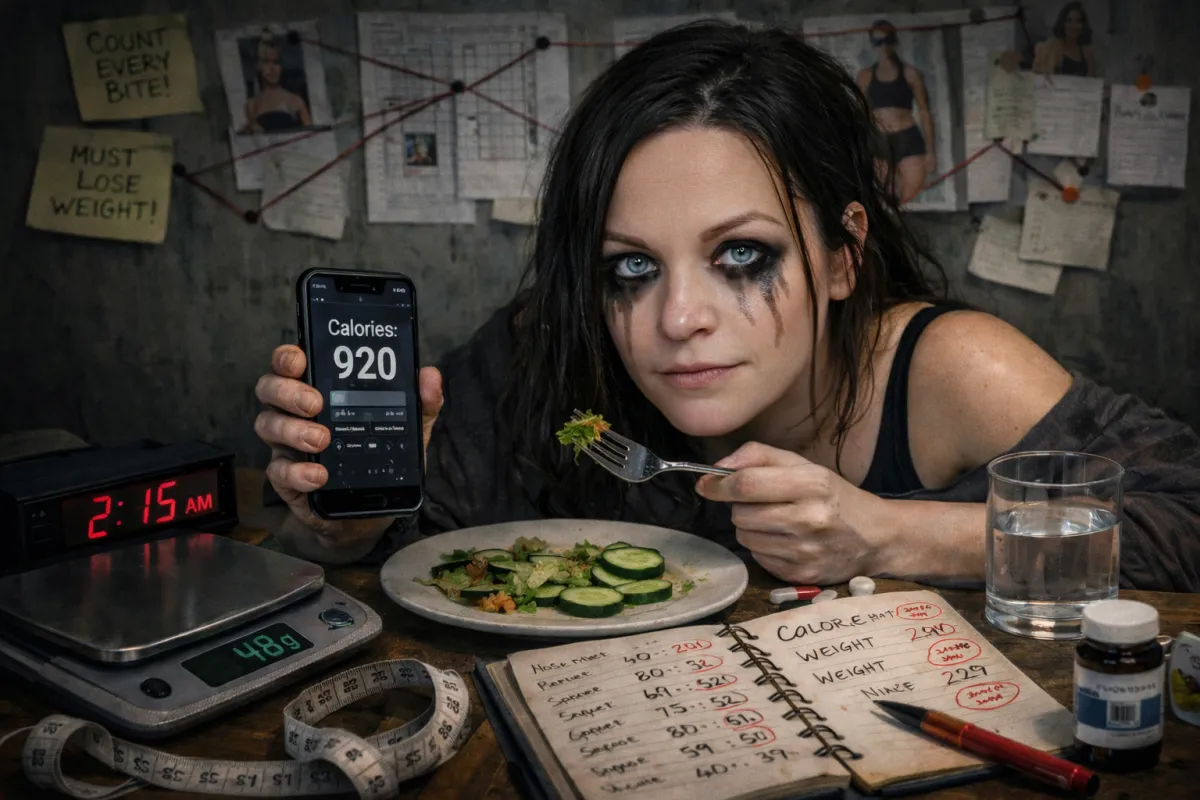
The Dark Side of Tracking Your Food
If tracking feels calming when you do it and terrifying when you do not, you are not dramatic. You are not broken. You are not “bad at discipline.” You are describing something a lot of people experience when numbers stop being information and start feeling like safety.
This is not a post to drag tracking. Tracking can be genuinely helpful. It can teach you nutrition basics, show you patterns, and give you more clarity about what helps you feel energized and satisfied.
But tracking can also turn into a tiny little app-shaped courtroom where you are on trial every day, and the verdict is your worth.
So let’s talk about tracking in a way that actually helps. What it is for, what it is not for, how it can teach you, how it can trap you, when it’s time to step back, and how to Heal the Beast if tracking has been tied to fear, control, and self-worth.
What tracking is for
Tracking is for awareness. It is for information. It is for learning patterns and building basic nutrition literacy.
Tracking can help you see what you are actually eating, not in a shamey “gotcha” way, but in a practical way. It can show you what protein looks like outside of a label. It can show you why you might feel ravenous at night after accidentally under-eating all day. It can show you how meal timing affects your energy, hunger, digestion, mood, cravings, training, sleep, and focus.
Tracking can also help you understand portions in a way that is actually useful, not rule-based. A serving size is not a law. It is a reference point. Some people see a portion and think, “If I eat more than that I failed.” Other people see a portion and think, “I must eat all of that because that’s what I’m allowed.” Neither one is the point. The point is learning what different amounts look like in real life and how those amounts land in your body. Some days you might feel best with less. Some days you might need more. Your body is allowed to be dynamic.
The healthiest version of tracking uses the data as a flashlight, not a weapon.
What tracking is not for
Tracking is not for earning your worth.
Tracking is not a morality system. It is not a courtroom where the app is the judge and you are on trial. It is not a daily test of whether you deserve food, rest, or confidence. Data is neutral. Food is not a report card. Your value as a human does not rise and fall based on whether you hit a number.
If tracking helps you feel informed and grounded, awesome. If tracking makes you feel anxious, rigid, or like a failure when you do not do it perfectly, then the tool is no longer acting like a tool. It is acting like a threat system.
When tracking can actually teach you something
There is a version of tracking that is genuinely educational. Think tracking as a temporary science experiment, not a lifelong parole officer living in your phone.
Yes, it can teach you what protein looks like outside a label. Not in a diet culture way, but in a “ohhhh, that’s why I am starving an hour later” way. It can teach you how certain choices affect your appetite and energy. It can teach you what happens when you accidentally under-eat all day and then your brain turns into a snack-seeking missile at night, hunting chips like it’s on a mission from the universe.
But the real value, the part people skip, is that tracking can help you learn how food makes you feel. Not just physically, but mentally too. Because food doesn’t just hit your stomach, it hits your whole life. You know what I’m talking about… when you haven’t eaten enough and suddenly you’re like, “I’m fine, I’m fine,” and then five minutes later you’re mumbling through clenched teeth because you’re hangry and you’re one minor inconvenience away from flipping a table.
That’s information. That’s your body giving feedback.
Your patterns might look totally different than mine, and they might look totally different than Aunt Mildred’s too, or your mom’s, and that’s the whole point. You are not trying to obey a portion. You are learning how your body responds.
This is the difference between building a relationship with your body and treating your body like a problem to solve.
The mindset that makes tracking helpful
This part matters more than the app.
Learning lives in curiosity, and you already know my opinion on this: curiosity is a fucking superpower.
Curiosity is noticing patterns, connecting dots, and gathering information without turning it into a shame spiral. Policing is when the app becomes a weapon and every data point turns into self-attack and catastrophe.
If tracking is helping you learn and feel more grounded, it might be serving you. If tracking is stealing your peace and turning food into a daily verdict, we need to talk about what it is really trying to protect you from.
When tracking becomes an obsession
Tracking becomes an obsession when the number stops being information and starts being safety.
It looks like your brain believing, “If I know the number, I’m okay. If I don’t know the number, I’m not okay.” It can feel like you need the app to tell you who you are today. Good. Bad. Safe. Unsafe. In control. Out of control.
Obsession shows up when flexibility disappears. When eating without logging feels scary. When a restaurant meal or a meal someone else makes feels like a threat instead of a normal part of life. When you cannot be present because you’re mentally doing math. When going over triggers shame, restriction, punishment, compensating behaviors, or the classic “welp, I ruined it, might as well burn the day down and start over Monday” spiral.
Obsession is not about how often you track. It is about the relationship you have with it. When tracking stops being a tool and starts becoming identity, it has crossed the line.
My Beastly Story, the tracking version
I did not learn this from a textbook. I learned it from living inside it.
For me, tracking didn’t feel like information. It felt like safety. If I logged every bite and stayed under a number, I was “good.” I was in control. I was allowed to feel okay. And if I didn’t track, or I went over, my brain treated it like an emergency. Not a normal “I ate more than planned” moment. More like, “You blew it. You’re a failure.” I’d end up curled up on my bed crying, cringing, and feeling like a number had just handed me a verdict on my worth.
And it started young. Like, both laugh-and-cringe young. I found an old food diary from when I was ten years old. Ten. I flipped to one day and it wasn’t even finished, but there was one entry written down: “1 cert.” One Certs mint. At ten years old, I was concerned with how many calories a mint had.
That was the vibe.
But tracking wasn’t the whole problem. It was part of a bigger war I was fighting with myself.
After years of bullying, and then a relationship that almost killed me, I believed the solution was to change me. I did not know how to look inward for love or acceptance, so I chased external approval with rules. Food became a test. Exercise became atonement. Rest felt like failure. Tracking became the scoreboard I used to decide whether I deserved pride or deserved shame.
And the messed up part is that it looked “healthy” from the outside. Socially acceptable self-punishment dressed up as discipline. I could lose weight and still feel trapped. I could hit numbers and still feel anxious. Because the goalpost always moved, and the app never said, “Congratulations, you’re finally worthy.”
If you want the full version of this story and what came next, go listen to the “My Beastly Story” episode of my podcast, Unveiling the Beast, or read the full written version on my website.
And if any of this feels like you, I’m a coach and this is literally what I help people heal. You can book a free exploration chat with me here, and we’ll talk about what is going on and what support could look like.
When to stop tracking
Let’s talk about when it’s time to stop, pause, or at least loosen your grip. Not because tracking is evil, but because sometimes the cost is way too high.
If tracking creates more stress than support, it’s time to step back. If it ramps up anxiety, rigidity, obsessive thoughts, or shame, it’s time to step back.
And I want to say this clearly: tracking can look like you’re being “healthy” on paper, but if the process is making your nervous system live in a constant state of threat, that is not health. That is stress. Chronic stress, shame, and self-attack are far more damaging to your overall wellbeing than eating a little more than you planned on a random Wednesday. Going over a number is not toxic. Living in fear of the number is.
If you feel like you cannot eat unless it’s logged, or a missed log feels like failure, it’s time to step back. If tracking triggers restriction, compensating behaviors, punishment workouts, or a shame spiral, it’s time to step back.
The goal of tracking is not to track forever like it’s your full-time job and your app is your boss. The goal is to build awareness you can keep when you stop tracking. If tracking is building dependency instead of skill, the tool is no longer serving your health adventure. It is running it.
Heal the Beast, awareness without shame
Healing here is not just “stop tracking.” Healing is rebuilding self-trust. It is teaching your nervous system that you can be safe without being perfect.
Because for most people, the obsession was never really about the app. It was about what the app was trying to solve emotionally. Fear. Control. Scarcity. The belief that you have to be smaller, stricter, or more perfect to be acceptable.
Here’s what healing can look like in a practical, real-life way.
Start by separating data from worth. If you choose to track, practice a new relationship with the numbers. For some people, the most healing way to start is to not even set a target. No calorie goal, no macro goal, no scoreboard. Just gather data like a nerdy little scientist. You’re not tracking to win. You’re tracking to learn. The app is not a judge. It is a notebook.
This is where noticing without judging becomes your best friend. You’re practicing awareness without turning it into a shame spiral. You notice what you ate, you notice how you feel, you notice what your brain says about it, and you don’t immediately label it good or bad. Even if judgment shows up, you notice that too. Oh look, there’s my inner critic doing the most. Noted. That’s it. Not punished. Just noticed. Because awareness creates choice, and choice is where freedom starts.
Then redefine success. Success is flexibility. Success is eating a meal, enjoying your life, and moving on without mentally putting yourself on trial. Success is gathering data without turning it into a grade. Success is missing a log, having an untracked meal, or going off-script for a day and still feeling grounded. That is self-trust. That is healing. The goal is peace, not perfection.
If you are not ready to stop tracking but you know you’re too attached, treat it like training wheels instead of handcuffs. Make it a temporary learning phase with an end date. A staircase step, not a forever identity. The goal is to internalize awareness, not outsource your intuition to an app forever.
You can also bridge away from numbers by tracking cues instead. Before you eat, check in with hunger and stress. After you eat, check in with satisfaction and how your body feels an hour later. That is still tracking, but it is connection-based tracking, not punishment-based tracking. You’re learning your body’s language instead of only trusting an app.
Recommended Resource
If you want to dig deeper into rebuilding trust with food and learning to listen to your body, I recommend Intuitive Eating, 4th Edition. Click here to check it out. This is an affiliate link, which means I may earn a commission if you purchase through it at no additional cost to you. I only recommend products and resources I genuinely use, like, or believe may be helpful.
And if shame still hits, plan for the spiral. You do not need a punishment plan. You need a nervous system plan.
One time my hot husband, back when he was my hot boyfriend, and I ate Chinese food and I waaaay overstuffed myself. Full food coma status. I felt instant guilt and marched myself to the apartment complex gym and got on the elliptical for an hour. A fucking hour. My stomach hurt so badly I thought I was going to throw up, but in my head I was like, “At least I burned some of it off.”
That is not how our bodies work. We are not robots with perfectly allotted calorie allowances like we’re running on a monthly data plan. Bodies are dynamic. Appetite shifts. Needs shift. Some days you eat more because you moved more, slept less, had more stress, or you are literally just hungrier. You cannot erase food with exercise, and you do not need to punish yourself for being a human with normal fluctuations.
And I want to be really honest. I don’t live in food shame anymore. Not because I’m special, and not because I finally “got disciplined,” but because I did a lot of inner work with coaches. I healed the belief underneath the behavior. I’m sharing that story from the other side because I want you to know it does not have to stay like that.
So if shame still shows up for you, pause. Breathe. Name it: my brain is looking for safety. Remind yourself you can be safe without punishing yourself. Then do one regulating action, not a compensating action. Drink water. Eat a real next meal. Take a walk for your brain, not your calorie burn. Text someone. Take a shower. Turn on music. Do something that brings you back to the present.
And let me say this clearly: the nervous system plan is not the destination. It’s the on-ramp. It’s what helps you stop the spiral long enough to build something new. The real goal is that food doesn’t trigger shame anymore. The goal is peace. The goal is freedom. The goal is that an imperfect eating day doesn’t turn into a self-punishment week. You keep going, still worthy, still safe, still you.
Final thoughts
Tracking is a tool. It can teach you. It can support awareness. But if it becomes obsessive, it doesn’t mean you’re broken. It means your brain has been using control as safety.
Healing is learning safety without perfection. Awareness without shame. Growth without self-abuse. Freedom to use the tool when it helps, and freedom to put it down when it harms.
You don’t have to earn your worth through numbers. You get to build a relationship with yourself that feels safe, steady, and kind, even on imperfect days. That’s real health. That’s real freedom. That’s coming home to you.
Unveil the beautiful Beast within YOU. 💜
Keep Reading
If food is taking up way more brain space than you want it to, read Why You Think About Food 24/7 (Not a Discipline Problem) next. Click here to read it.
YouTube Video:
Want More From Beautiful Beast Within Studios?
Join The Weekly Unveiling:
https://beautifulbeastwithinstudios.com/join-newsletter
Explore Beautiful Beast Within Studios:
https://linktr.ee/beautifulbeastwithinstudios
Beastly Merch:
https://beautifulbeastwithinstudios.com/merch
Support Beautiful Beast Within Studios:
https://beautifulbeastwithinstudios.com/bbws-contribution-page
Sources and references
Self-Monitoring in Weight Loss: A Systematic Review of the Literature (Burke et al., 2011)
https://pmc.ncbi.nlm.nih.gov/articles/PMC3268700/
A systematic review of the use of dietary self-monitoring in behavioural weight loss interventions: delivery, intensity and effectiveness (Raber et al., 2021)
https://pmc.ncbi.nlm.nih.gov/articles/PMC8928602/
Associations Between the Use of Fitness and Diet Tracking Technology and Disordered Eating Behaviour: A Systematic Review (Moody et al., 2025)
https://pmc.ncbi.nlm.nih.gov/articles/PMC12547374/
Effects of diet and fitness apps on eating disorder behaviours: qualitative study (Eikey et al., 2021)
https://pmc.ncbi.nlm.nih.gov/articles/PMC8485346/
My Fitness Pal calorie tracker usage in the eating disorders (Levinson et al., 2017)
https://pmc.ncbi.nlm.nih.gov/articles/PMC5700836/
Validation of the flexible and rigid control dimensions of dietary restraint (Westenhoefer et al., 1999)
https://pubmed.ncbi.nlm.nih.gov/10349584/
When the social self is threatened: shame, physiology, and health (Dickerson et al., 2004)
https://pubmed.ncbi.nlm.nih.gov/15509281/
Immunology of Stress: A Review Article (Alotiby, 2024)
https://pmc.ncbi.nlm.nih.gov/articles/PMC11546738/



Copyright 2025 | Beautiful Beast Within Studios LLC | Privacy Policy