
The Beastly Blog
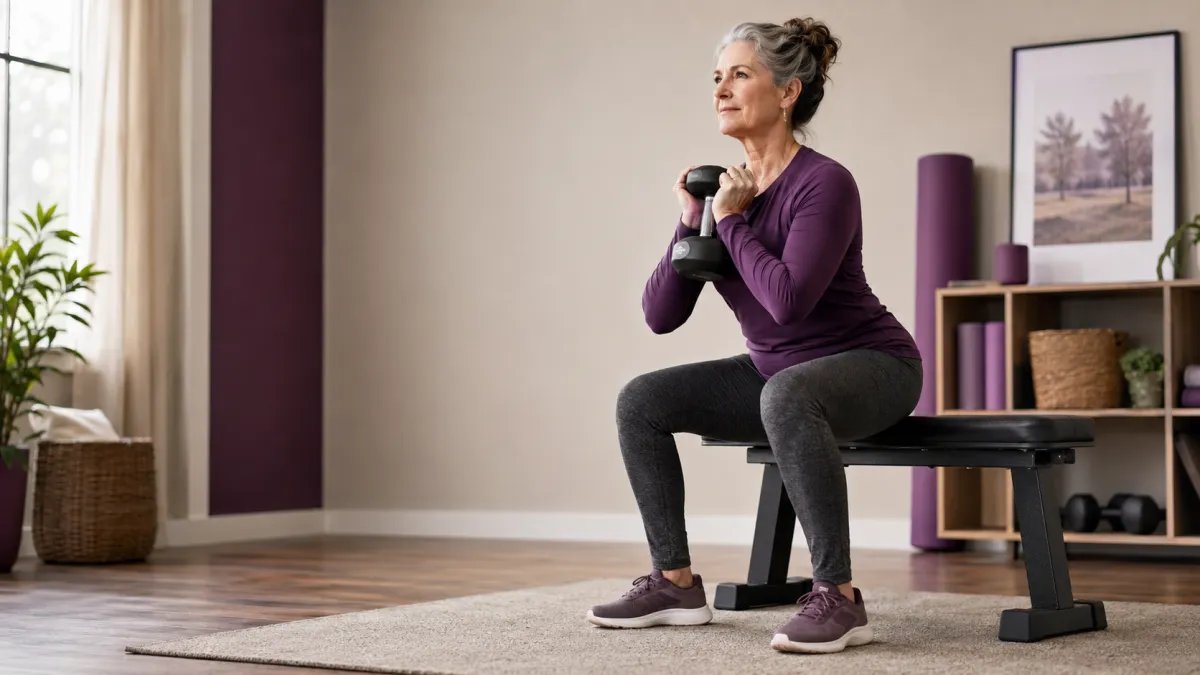
Your Bones Want You to Lift
If you’ve ever felt like a workout only counts if you’re drenched in sweat, your smartwatch throws a parade, and you have to lie on the floor afterward like a knocked over plant, I want to gently grab your shoulders and say: we have been taught the wrong measuring stick.
Move the Beast is not a calorie burning contest. It is not a punishment for eating food. It is not a sweaty apology letter to diet culture. Move the Beast is about building a body that can hold you up in real life.
This topic is personal for me. My mom was recently diagnosed with osteoporosis and has already broken two bones. When something like that hits your family, movement stops being a “fitness goal” and becomes a quality of life conversation. It becomes about protection, confidence, and staying independent, not gym culture gains.
So let’s talk about what movement can actually do for bone health, what kinds of movement matter most for osteopenia and osteoporosis, and how to approach strength training in a way that feels strong and safe, not scary and fragile.
Quick loving disclaimer
I’m not your doctor and this isn’t medical advice. If you have osteoporosis, osteopenia, a fracture history, chronic pain, dizziness, balance issues, or you’re unsure what movements are safe for your body, please talk to your clinician. If you can work with a physical therapist who understands osteoporosis, that’s one of the best investments you can make. You deserve a plan that fits your body and your history, not a one size fits all routine that leaves you guessing.
My job in this article is to give you clarity, reduce fear, and help you understand the big rocks so you can move forward with intention.
Osteopenia vs osteoporosis
Osteopenia and osteoporosis both describe low bone density, but they’re not the same thing. Osteopenia is lower than normal bone density that is not yet in the osteoporosis range. Think of it like an early warning light. Not a doom sentence. More like, “Hey friend, let’s support this system now.”
Osteoporosis is lower bone density with higher fracture risk, especially with falls or certain stresses. It can feel scary because sometimes fractures happen from things that seem small, like a fall from standing height.
Here’s the important nuance. Bone density is only one part of the story. Strength, balance, coordination, posture, vision, medications, confidence, and fall risk all influence what happens in real life. That is one of the biggest reasons moving the beast matters so much here.
The big reframe: this is not a calorie conversation
A lot of people were taught that movement only counts if it burns a bunch of calories or looks impressive. If it doesn’t feel like suffering, it must not be working.
That mindset is basically diet culture in athletic shoes.
Bones do not care about your calorie burn. Bones care about safe stress and repetition over time. Your nervous system cares about stability and confidence. Your future self cares about not falling, not fracturing, and not living with that constant background fear of “what if I break something just existing.”
So today we’re redefining gains. The gains we want are strength you can use, balance that keeps you upright, posture that supports your spine, and muscle that helps protect joints. The flex is being able to do your life.
Bone science without the boring lecture
Your bones are living tissue. They remodel and adapt. They are not just decorative skeleton parts hanging out inside you like a Halloween prop.
One of the ways bones get the message to stay strong is through mechanical loading, which is a fancy phrase for a simple idea: your body responds to what you ask it to do. When you strength train, your muscles pull on your bones. That pulling sends a signal that says, “We need this structure to be strong enough for this life.” Weight bearing movement like walking or stair climbing loads your bones from the ground up, which also matters.
There’s another piece that is just as important, especially if someone already has osteoporosis. Movement improves strength, coordination, and balance, which can lower fall risk. Since many fractures happen because of falls, fall prevention is fracture prevention. That’s a big reason we train, and it has nothing to do with shrinking your body.
The Move the Beast framework for bone support
If you want a simple mental map for bone health, think in three lanes: strength training, weight bearing movement, and balance plus posture. You do not need perfection in all three lanes every week. You just need consistency over time.
Strength training: the main character
Strength training is the centerpiece here because it supports bone health and helps you build the kind of muscle that protects your life. We want stronger legs, hips, glutes, back muscles, and grip. We want the muscles that help you stand up, sit down, carry groceries, climb stairs, reach for things, and catch yourself if you trip. Real life strength. “I can do my life” strength.
Also, strength training does not mean you need to become a competitive powerlifter. If that is your hobby, I support your hobby. For most people, strength training simply means progressive resistance. Over time, you gradually challenge your muscles. You can do that with body weight, bands, machines, dumbbells, kettlebells, or barbells. The tool is not the point. The progression is the point.
A simple way to think about it is to train the movement patterns that already show up in daily life. Sitting down and standing up. Stepping up. Carrying. Pushing. Pulling. Hinging at the hips while keeping the spine supported. Those patterns are the whole movie.
If squat, hinge, push, and pull still sound like fitness-industry hieroglyphics, I broke them down in You’re Overcomplicating Functional Fitness
Weight bearing movement: the underrated daily win
Weight bearing movement means you’re upright and your skeleton is doing the job of holding you up against gravity. Walking counts. Stairs count. Hiking counts. Dancing in your kitchen while you wait for coffee counts. This does not have to be intense to matter. Consistency is the magic.
This is the lane people either underestimate or overcomplicate. You don’t need to crush miles. You need regular practice moving through the world in a way your body can repeat.
Balance and posture: the quiet superhero
Balance is the quiet superhero in this story because the real life problem is often the fall. If we reduce falls, we reduce the chances of fractures. Balance practice can be short, simple, and repeatable. The goal is to make your body better at staying upright when life throws surprises like curbs, wet leaves, uneven ground, or the mysterious object that appears in the hallway overnight.
Posture and spinal support matter too, especially for confidence and safety. Strong back muscles, strong glutes, and good trunk stability help you move with more steadiness. This is not about standing like a statue. It’s about building support so your body feels steady and safe.
Safety without scare tactics: smarter, not smaller
This is where people tend to swing to extremes. One extreme is “I’m never moving again, I will now become one with my couch.” The other extreme is “Fear is for the weak, hand me a barbell and a dream.” We are doing neither.
If you have osteoporosis, especially if there’s concern about spinal fractures, the goal is not to stop moving. The goal is to move in a way that builds strength while treating your spine like the precious, hardworking, slightly dramatic masterpiece that it is. That means we’re going to be cautious with repeated deep bending where the spine is rounded under load, and we’re going to be cautious with aggressive twisting, especially the twist plus crunch combo that shows up in a lot of “core” workouts. We earn intensity with good form and gradual progression, not with chaos.
This doesn’t mean you need to live in bubble wrap. It means you train like someone who respects their bones. You can get strong without doing the riskiest version of everything. You can train your core without living in crunch land. You can strengthen your back and hips without folding forward under heavy load with a rounded spine. You can build strong legs without turning every session into a chaos circuit where your heart rate is having a panic attack and your form leaves the building.
If that makes you feel relieved, good. That relief is your nervous system realizing it’s allowed to get stronger without feeling threatened.
A simple weekly rhythm for real humans
Let’s make this practical, and I need you to hear this first: this is a starting point, not a prescription. Bodies are not IKEA furniture. You don’t all come with the same parts and the same instructions. Your bone density, your fracture history, your balance, your strength right now, your pain, your comfort level, your medications, and your confidence are all different. Use this framework as a baseline, then adjust it with your clinician or a PT who knows your specific situation.
If you’re in prevention mode, meaning normal bone density or osteopenia without a scary fracture history, a realistic rhythm could look like strength training two to three times per week, weight bearing movement most days, and a couple small balance sessions sprinkled in. Simple, repeatable, and boring in the best way.
If you have osteoporosis, especially if you’ve had fractures, you still want strength training, but you turn the dial toward control and alignment. You build slowly, you earn intensity with great form, and you choose exercises that match your risk level. You still do weight bearing movement, but you keep it appropriate for your body and your safety. Balance becomes a regular habit because falls are often the moment fractures happen, so preventing falls is part of the plan.
This is the steady and strong era, not the spicy and chaotic era. We do not chase fatigue. We chase function.
What “strength training” can look like without overthinking it
If you’ve ever looked at a workout plan and thought, “Cool, I need seven pieces of equipment, three apps, and a minor in exercise science,” let’s simplify.
Strength training can start with movements that already exist in your daily life: standing up from a chair, climbing a step, carrying groceries, reaching and pulling, pushing something away, hinging at the hips while keeping the spine supported. Progression can be as simple as doing a little more over time, whether that’s slightly more resistance, an extra rep, another set, better control, or a more confident range of motion.
If you’re unsure what’s safe for your body, not knowing is not a personal failure. It’s not a motivation problem. It’s not a discipline problem. It’s a support problem. This is exactly when a PT or a well qualified trainer who understands osteoporosis can help you build confidence and avoid movements that do not match your needs.
Fear, avoidance, and the cycle that keeps people stuck
Osteoporosis can bring fear into the room fast, especially if you’ve seen fractures happen from something that seemed small. Your brain starts scanning for danger everywhere and whispering, “What if walking is risky? What if lifting is risky? What if moving is risky?”
I want to say this gently. Avoiding all movement is not the safe option. It often leads to more weakness over time, less balance, less confidence, and more fear. It’s a rude cycle.
The safer option is appropriately chosen movement that builds strength, balance, and trust in your body. Move the Beast can be gentle and still be powerful. It can be slow and still be effective. Consistency beats intensity when intensity scares you out of showing up.
Myth bust: repeatable movement is not the problem
Here’s the myth that needs to retire. If you can repeat a workout, it must not be intense enough to “work.” If it’s repeatable, it must be pointless.
Nope. Repeatable movement is not the problem. The problem is the myth that the hardest workout is the best workout.
For bone health, the goal is to send your body the right signal consistently over time. Strength, balance, control, and progression are the magic. Not the workout that wipes you out for a week and makes you afraid to come back. Your movement doesn’t have to look impressive. It has to be useful. It has to support your life.
A question for you
What do you want your body to be able to do ten years from now? Not what you want it to look like. What do you want it to do? Carry groceries without fear, travel without worrying about falls, play on the floor with your kid, keep hiking, keep lifting, keep living. Those are the goals that matter.
Want support with this
If you want help building a strength plan that supports bone health without fear based fitness nonsense, you can book a free exploration chat. You deserve a plan that feels safe, repeatable, and empowering.
Every time you choose movement that supports your life, not your shame, you are unveiling the beautiful Beast within you.
Keep Reading
If you want more reasons to move that have absolutely nothing to do with shrinking your body, read 8 Exercise Perks You Can’t See on a Scale next. Click here to read it.
Watch the YouTube video
Sources and references
Bone Health & Osteoporosis Foundation (BHOF) | Osteoporosis Exercise for Strong Bones: https://www.bonehealthandosteoporosis.org/patients/treatment/exercisesafe-movement/osteoporosis-exercise-for-strong-bones/
International Osteoporosis Foundation (IOF) | Exercise for bone health and osteoporosis (PDF): https://www.osteoporosis.foundation/sites/iofbonehealth/files/2022-09/exercisebrochure_web.pdf
Osteoporosis Canada | Too Fit to Fracture (exercise book PDF): https://osteoporosis.ca/wp-content/uploads/OC-Too-Fit-To-Fracture-Osteo-Exercise-Book.pdf
PubMed | LIFTMOR trial (high-intensity resistance and impact training): https://pubmed.ncbi.nlm.nih.gov/28975661/.


Copyright 2025 | Beautiful Beast Within Studios LLC | Privacy Policy