
The Beastly Blog
You’re Overcomplicating Functional Fitness
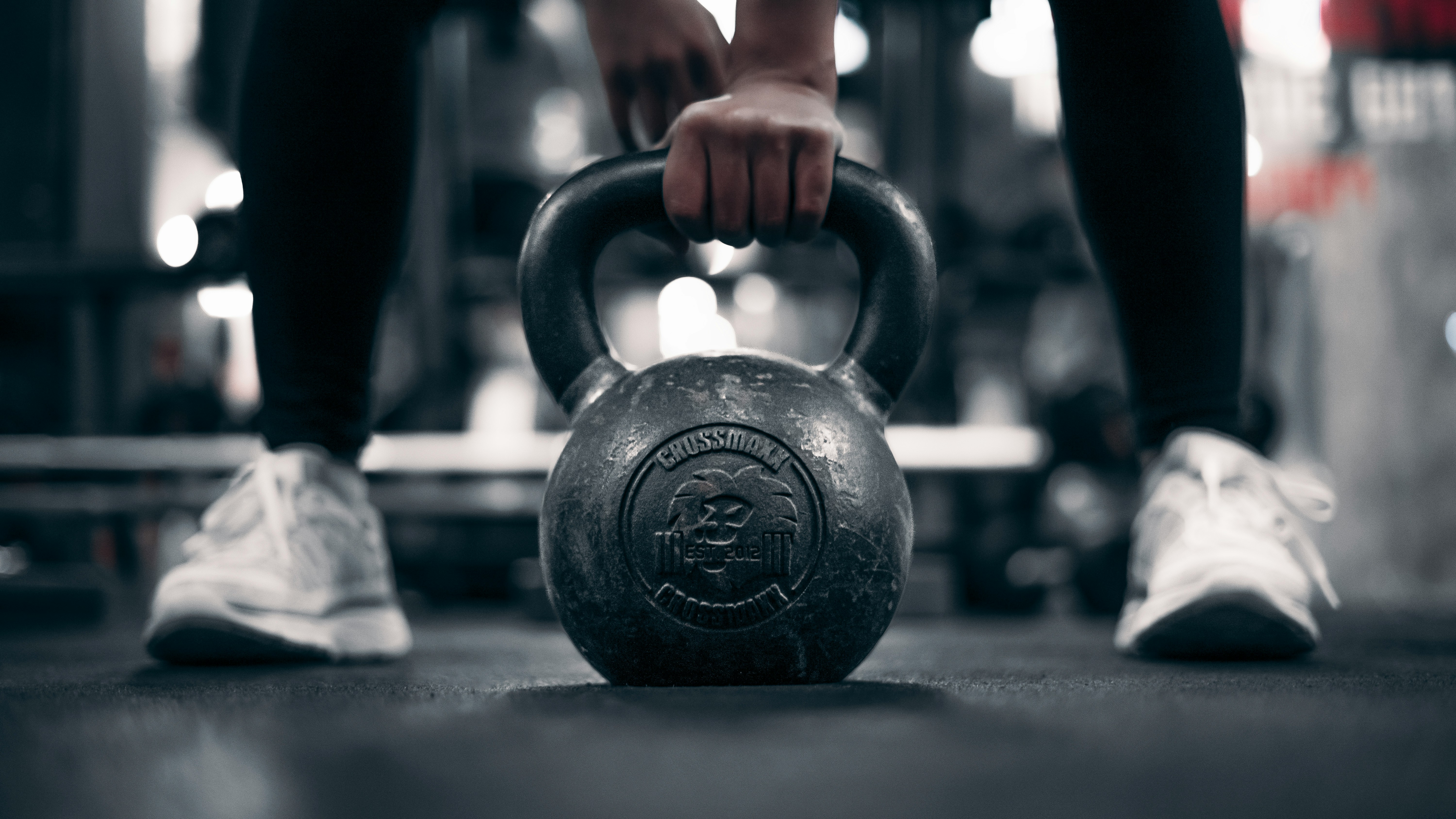
Photo by HamZa NOUASRIA on Unsplash
Functional fitness has a branding problem.
The phrase should describe exercise that helps humans function. Pretty straightforward. But somewhere along the way, the fitness industry decided it needed more drama.
Now, “functional fitness” often looks like someone balancing on half a rubber ball while holding a kettlebell overhead, lifting one foot, dodging a medicine ball, and trying not to meet their ancestors.
Can that kind of training have a purpose? Sure.
Is that what functional fitness has to look like? Absolutely not.
Most functional training is built on movements that are much less exciting and much more useful. Squatting, hinging, pushing, and pulling may not earn you a slow-motion Instagram montage, but they form a strong foundation for the things humans do every day.
We sit. We stand. We bend. We lift. We push things away. We pull things toward us. We reach for objects, carry loads, climb stairs, move through space, and occasionally drag the laundry basket across the floor because carrying it feels emotionally unreasonable.
Functional fitness is not about making those movements look fancy. It is about maintaining or building the physical capacity to do them.
What Is Functional Fitness?
Functional fitness is training designed to improve your ability to do movements that matter in everyday life. It is less about a specific style of workout and more about choosing and adapting exercises around a person’s goals, abilities, and real-world needs. An international panel of experts recently defined functional training as exercise intended to improve human performance in relation to daily life, physical fitness, sport, rehabilitation, and a person’s individual needs and goals. The panel also questioned whether functional training is even a truly separate category from good, purposeful training.
That last part is important.
Shouldn’t all training have a function?
Even if the function is simply helping you feel stronger, keeping movement accessible, or allowing you to carry every grocery bag inside at once because taking a second trip is apparently an attack on your honor?
Functional fitness is not one official workout method. It is a way of choosing and adapting exercises so they build abilities that matter outside the exercise itself.
For this article, we are using four broad movement patterns as our foundation:
Squat
Hinge
Push
Pull
These are not the only movements humans perform. Other systems may also include lunging, carrying, rotating, balancing, crawling, or walking. There is no sacred stone tablet declaring that every trainer must organize movement in exactly the same way.
But squat, hinge, push, and pull give us a practical place to begin.
The Squat: Lowering and Raising Your Body
The squat pattern happens whenever you lower and raise your body by bending through your knees and hips.
You use some version of it when you sit in a chair, stand back up, lower yourself toward the floor, climb stairs, get into a car, or sit on the toilet without turning the entire event into a dramatic production.
The goal is not for every person to perform a deep barbell squat. The useful ability is being able to control your body as you lower and raise it.
Sample squat exercises
More accessible or supported options:
Chair sit-to-stand
Body-weight squat to a chair
Supported squat while holding a stable surface
TRX or suspension-trainer squat
Stability-ball wall squat
Leg press
Free-weight options:
Goblet squat
Dumbbell suitcase squat
Kettlebell front squat
Barbell front squat
Barbell back squat
Zercher squat
Machine and gym options:
Hack squat
Belt squat
Smith-machine squat
Leg press
Pendulum squat
A leg press does not perfectly copy standing up from a chair, but it can still strengthen many of the muscles involved. An exercise does not have to look identical to daily life to support your ability to handle daily life.
The Hinge: Bending and Lifting Through the Hips
The hinge is the pattern we use when the hips travel backward and the torso moves forward while the trunk remains controlled.
It shows up when you pick something up from the floor, lift a laundry basket, reach into a low cabinet, grab a bag, move a box, or bend down to tie your shoes while wondering when the ground became so offensively far away.
People often confuse a hinge with a squat. In a squat, the knees and hips bend as the body lowers more vertically. In a hinge, the movement is driven more heavily by the hips traveling backward.
Sample hinge exercises
Learning and accessible options:
Hip hinge to a wall
Dowel hip hinge
Body-weight good morning
Elevated kettlebell deadlift
Cable pull-through
Banded good morning
Free-weight options:
Kettlebell deadlift
Dumbbell Romanian deadlift
Barbell Romanian deadlift
Conventional deadlift
Sumo deadlift
Trap-bar deadlift
Barbell good morning
Kickstand Romanian deadlift
Single-leg Romanian deadlift
Machine and cable options:
Cable pull-through
Smith-machine Romanian deadlift
Lever deadlift machine
Back-extension machine
Yes, barbells appear on this list. Please observe a respectful moment of silence for my bar that is currently trapped in storage.
The Push: Moving Something Away
Pushing includes moving an object away from your body or moving your body away from a surface.
You push doors, shopping carts, furniture, lawn equipment, heavy boxes, and children on swings. You may also push yourself up from the floor, out of a chair, or away from the countertop after leaning there for twenty minutes wondering what you walked into the kitchen for.
Pushing can happen horizontally, like a push-up or chest press, or vertically, like an overhead press.
Sample pushing exercises
More accessible or supported options:
Wall push-up
Countertop push-up
Incline push-up
Seated resistance-band chest press
Machine chest press
Seated machine shoulder press
Horizontal pushing options:
Floor push-up
Knee push-up
Dumbbell floor press
Dumbbell bench press
Barbell bench press
Cable chest press
Resistance-band chest press
Sled push
Vertical and angled pushing options:
Dumbbell overhead press
Kettlebell overhead press
Barbell overhead press
Landmine press
Machine shoulder press
Half-kneeling single-arm press
Push press
You do not have to perform a push-up from the floor for your pushing work to count. A wall push-up is not a fake push-up. It is a version that changes the amount of body weight being moved.
That is not cheating. That is physics.
The Pull: Bringing Something Toward You
Pulling means bringing an object toward your body, pulling your body toward something, or drawing resistance from one position to another.
You pull open doors, move furniture, start lawn equipment, pull weeds, use a vacuum, drag objects, and retrieve fitted sheets from the dryer even though you know you will never fold them correctly.
Like pushing, pulling can happen in several directions. Rows are horizontal pulls. Pulldowns and pull-ups are vertical pulls.
Sample pulling exercises
Band and cable options:
Standing resistance-band row
Seated band row
Cable row
Single-arm cable row
Banded lat pulldown
Cable lat pulldown
Face pull
Straight-arm pulldown
Rope or cable pull
Free-weight options:
One-arm dumbbell row
Bent-over dumbbell row
Chest-supported dumbbell row
Kettlebell row
Barbell row
Pendlay row
Meadows row
Renegade row
Body-weight and machine options:
Suspension-trainer row
Inverted row
Assisted pull-up
Pull-up
Chin-up
Machine row
Chest-supported row machine
Assisted pull-up machine
Pulling exercises are another great example of why an activity does not need to perfectly imitate real life. A cable row may not look exactly like opening a heavy door, but it can strengthen the muscles and pulling capacity that help you do it.
Recommended Resource
These Pull-Up Assistance Bands have been with me through different sizes, different strength levels, and different seasons of movement, which is exactly why I love them. They make exercises more accessible when I need support and more challenging when I’m ready for it, without making my body feel like the problem. Click here to check them out. This is an affiliate link, which means I may earn a commission if you purchase through it at no additional cost to you. I only recommend products and resources I genuinely use, like, or believe may be helpful.
Why the Boring Basics Matter
Resistance training does more than improve how much weight someone can lift during a workout.
The American College of Sports Medicine’s 2026 position stand reviewed 137 systematic reviews representing more than 30,000 participants. Compared with no exercise, resistance training improved strength, muscular power, endurance, balance, walking speed, chair-stand performance, and timed up-and-go performance.
Those are not just gym accomplishments. They connect to how humans move through daily life.
Want to see what that looks like in a specific real-life health conversation? In Your Bones Want You to Lift, I break down how strength, weight-bearing movement, and balance can support bone health and future-you function.
The review also delivered a message the internet desperately needed to hear: consistency generally matters more than complicated programming. Body-weight exercise, elastic bands, home-based routines, free weights, and machines can all produce meaningful benefits. Advanced methods and elaborate programs are often optional for the average healthy adult.
In other words, you do not need to confuse your muscles, shock your metabolism, or make every set look like an audition for American Ninja Warrior.
You need an appropriate challenge performed consistently enough for your body to adapt.
Machines Are Not Fake Exercise
Machines are sometimes treated like the plastic utensils of the fitness world. Acceptable in an emergency, perhaps, but clearly inferior to the sophisticated people using free weights.
The research does not support that attitude.
A 2024 systematic review and meta-analysis found that machine-based resistance training improved strength and measures of functional capacity in older adults.
Research comparing machines with free weights also suggests that neither method is universally superior. People tend to improve most on the type of exercise they actually practice, while both methods can support strength and muscle development.
Machines can be especially useful when someone wants more stability, is learning how to challenge a particular area, feels unsteady, is returning after time away, or simply enjoys machines more than free weights.
And if the free-weight section makes you want to quietly disappear into the cardio area, Gymtimidation is for you. We talk about building confidence in that space without pretending everybody was born knowing what the hell a dumbbell does. A leg press is a tool. A barbell squat is a tool. A resistance band is a tool. Your body weight is a tool.
The best tool is not the one that earns the most fitness-culture approval. It is the one that helps you train safely, consistently, and effectively.
Functional Does Not Mean Needlessly Complicated
Balance, coordination, instability, and multiplanar movement can all be valuable. The problem begins when we assume adding more of them automatically makes an exercise better.
A squat on stable ground is functional.
A squat performed while holding onto support is functional.
A squat using a machine can be functional.
A squat on an unstable surface may also have a purpose, especially if balance or reactive control is the actual goal.
But if your main goal is building leg strength, making the exercise so unstable that you cannot challenge your legs very much may not be the smartest use of the movement.
Complexity should solve a problem or support a goal. It should not be added because the basic exercise did not look sufficiently exciting on camera.
Sometimes a squat can just be a squat.
The fitness industry will survive.
The Foundation Is Shared. The Version Is Personal.
This is where individualization belongs.
The underlying capacities to lower and raise your body, bend and lift, push, and pull are broadly useful. But that does not mean every human should perform the same version with the same equipment, weight, range of motion, speed, or level of support.
One person may train their squat with a barbell. Another may use a chair. Someone else may use a leg press because it allows them to challenge their legs without worrying as much about balance.
One person may deadlift from the floor. Another may elevate the weight. Someone else may begin by practicing a body-weight hinge toward a wall.
Individualization does not make the foundation less important. It makes the way we train that foundation more appropriate.
We can change:
The exercise
The equipment
The resistance
The range of motion
The level of support
The speed
The stability demands
The amount of practice
The position of the body
A modification is not the pretend version of an exercise. It is a legitimate training choice.
General Strength and Specific Practice Can Work Together
General resistance training can build the strength and capacity needed for many activities. But if there is a specific task you want to improve, practicing that task can also matter.
For example, someone who wants to get better at rising from a chair may benefit from strengthening their legs through squats or a leg press. They may also benefit from directly practicing sit-to-stands.
A study involving older adults with difficulty performing daily activities found that task-specific resistance training improved overall bed- and chair-rise ability and reduced the time required to complete those movements.
General training helps build the engine. Specific practice teaches you how to use that engine for the task.
You do not have to choose one or the other.
A Simple Way to Use the Four Patterns
You do not need to cram every exercise from this article into one workout. Please do not turn this into a five-hour gym hostage situation.
A simple full-body strength session might include:
One squat variation
One hinge variation
One pushing exercise
One pulling exercise
You could also add something for carrying, balance, rotation, mobility, cardiovascular endurance, or a specific activity that matters to you.
The exact workout should reflect your goals, experience, health, access, and preferences. The point is not to create one perfect routine for every body.
The point is to see that a strong foundation does not require a complicated one.
The Big Takeaway
Functional fitness is not a special collection of flashy exercises. It is training that supports your ability to function in your actual life.
Squatting, hinging, pushing, and pulling provide a useful starting point because they represent basic ways humans move their bodies and interact with the world around them. They can be trained with body weight, bands, dumbbells, kettlebells, barbells, cables, machines, or whatever equipment is available outside of storage.
The pattern is the foundation.
The exercise is the tool.
The individual human determines how that tool should be used.
You do not need to balance on a wobbly object while pressing a kettlebell overhead to prove that your workout is functional. You can build useful strength with simple movements, appropriate variations, and consistent practice.
The basics may be boring, but boring works.
Now go squat, hinge, push, or pull something.
And please appreciate your barbell while you still know where it is.
Watch the YouTube video here:
Sources and References
Journal of Sports Sciences: International Consensus on the Definition of Functional Training: Modified e-Delphi Method
https://www.tandfonline.com/doi/full/10.1080/02640414.2025.2477393
American College of Sports Medicine: Resistance Training Prescription for Muscle Function, Hypertrophy, and Physical Performance in Healthy Adults
https://pmc.ncbi.nlm.nih.gov/articles/PMC12965823/
Journal of Functional Morphology and Kinesiology: Machine-Based Resistance Training Improves Functional Capacity in Older Adults
https://www.mdpi.com/2411-5142/9/4/239
Sports Medicine Open: Effect of Free-Weight Versus Machine-Based Strength Training on Maximal Strength, Hypertrophy, and Jump Performance
https://pubmed.ncbi.nlm.nih.gov/37582807/
Journal of the American Geriatrics Society: Task-Specific Resistance Training to Improve the Ability of Older Adults to Rise from a Bed and Chair
https://pubmed.ncbi.nlm.nih.gov/11890578/



Copyright 2025 | Beautiful Beast Within Studios LLC | Privacy Policy